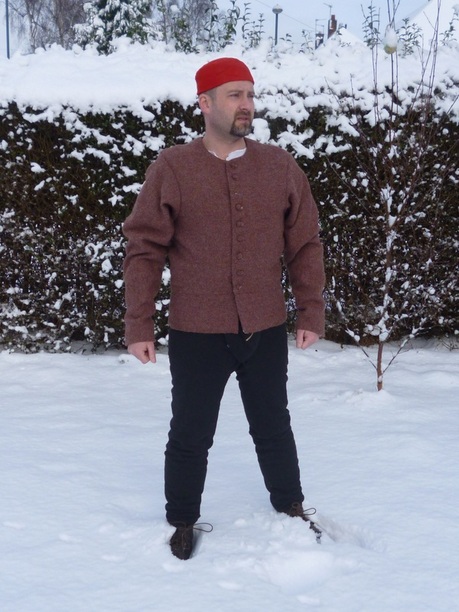
Authentic clothing
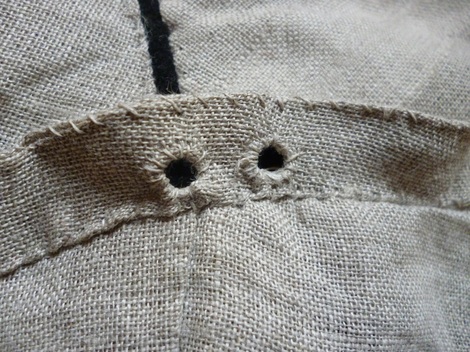
Handspun, hand loomed linen. Detail of point holes.
Most of the cloth used for 8th-15th century clothing is hand dyed with native historical materials that I've gathered from sources from the Derby University. With making historical garments for so long I set myself regulations on the construction of each garment.
1, use only fabrics that existed in the time period the garment represents.
2, sew everything by hand, which I've been doing since I made my first garment over fifteen years ago. I wouldn't know what to do with a sewing machine.
3, construct the garment as they would have. Basing my construction techniques on surviving clothing from the Greenland excavations, Medieval, Tudor and 18th century clothing from private collections and museums, Patterns of Fashion by Janet Arnold and many more reliable sources.
1, use only fabrics that existed in the time period the garment represents.
2, sew everything by hand, which I've been doing since I made my first garment over fifteen years ago. I wouldn't know what to do with a sewing machine.
3, construct the garment as they would have. Basing my construction techniques on surviving clothing from the Greenland excavations, Medieval, Tudor and 18th century clothing from private collections and museums, Patterns of Fashion by Janet Arnold and many more reliable sources.
Linen Underwear and Lining
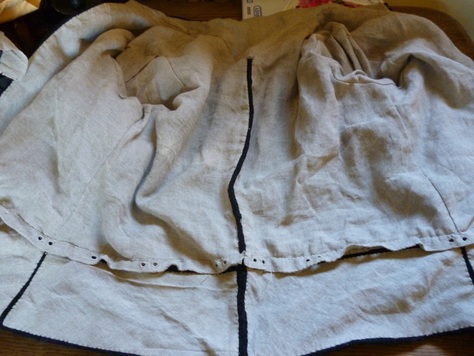
Lining of a doublet.
I use unbleached and bleached linen for all shirts, smocks and braes depending on status, peasants wore cheap unbleached linen straight from the loom that would naturally lighten with washing and sunlight, the mid to upper classes would wear a whiter bleached linen as the process of bleaching would add more cost to the fabric and display their status yet after a while the garment would take on a yellowish appearance and would be washed and pegged out flat upon the ground to bleach. All peasant clothing is made from wool and linen but sometimes I use hair (goat or horse). I find hand woven fabrics appropriate for Living History Displays.
Natural Native Plant Dyes
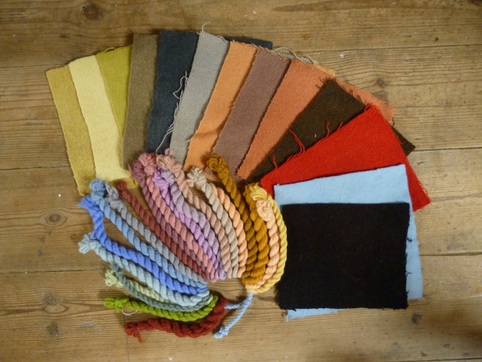
Here is a sample of colours that can be achieved through the use of barks, berries, roots and leaves. Includes birch, woad, yew, dock, alder, blackberry, elderberry, damson, weld, madder, onion skins and woad seeds (black).
Pre-dyed Wool Fabrics.
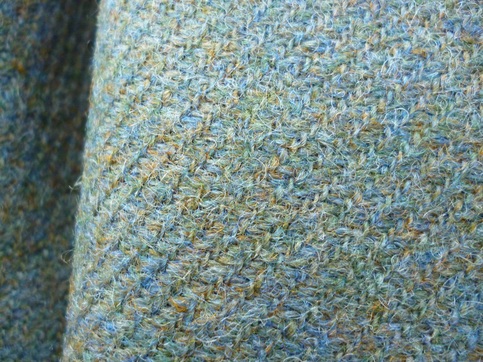
Not all of the wool fabric I dye myself. I buy in a selection of authentic twills and plain weave fabrics that have been dyed in the yarn with natural ingredients, most have been handloomed or loomed using some of the working water mills that still exist today. Where possible I also buy in undyed natural dark wools from suppliers of native ancient sheep breeds.
The Peasant